
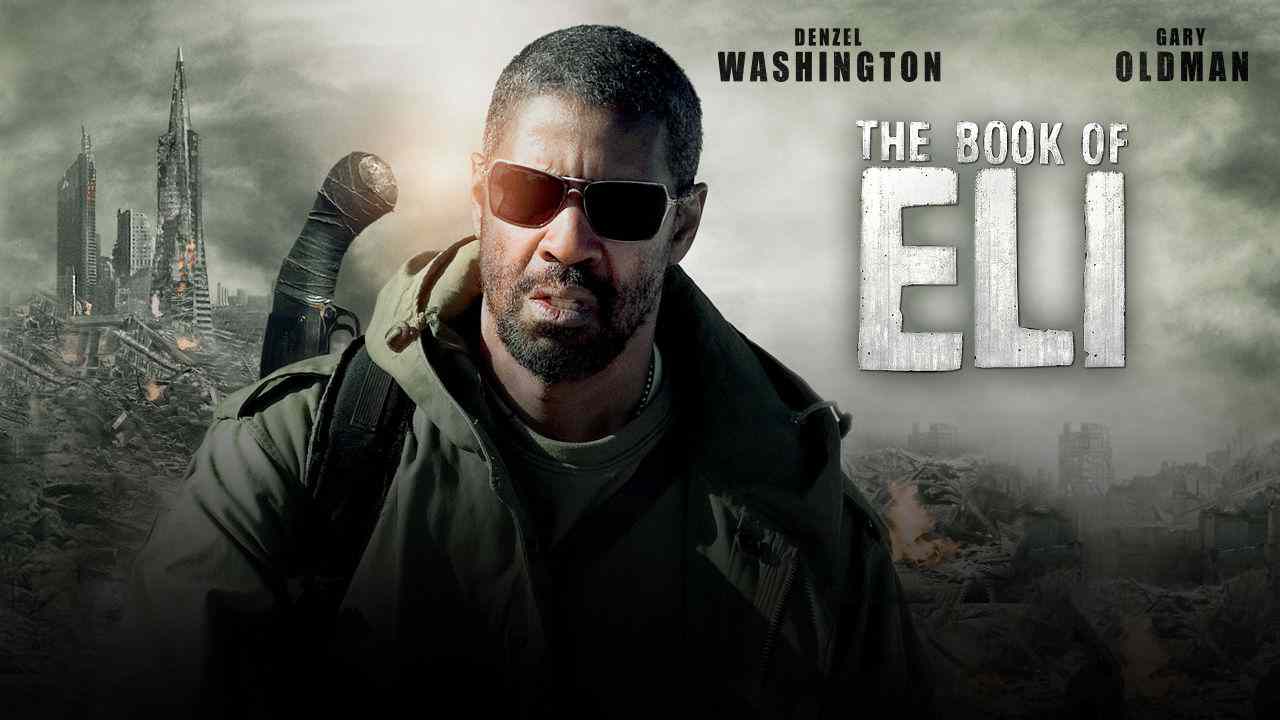

Review By Critical Chris
Director:
Allen and Albert Hughes
Producers:
Joel Silver, Susan Downey, Andrew Kosove,
Broderick Johnson
Writer:
Gary Whitta
Starring: Denzel
Washington, Gary Oldman, Mila Kunis, Ray Stevenson
Release
date: January 15, 2010
Running Time:
118 minutes
Denzel Washington is one of
the most celebrated actors in Hollywood. He’s quite good-looking and has some
charisma and has had a well-storied career. So recently I decided to have a
marathon of all my favourite Denzel vehicles which included, Malcolm X (1992), Out of
Time (2003), Courage Under Fire (1996), Ricochet (1991) and one that I found
a greater appreciation for on the second watch, The Book of Eli. In fact, I enjoyed it so
much that I decided to review it for this month’s issue. Released in
2010, The Book of Eli was written by Gary Whitta and directed by
the duo of Albert and Allen Hughes known together professionally as the Hughes
brothers. The twin brothers are recognised for previously helming violent films
such as Menace II Society (1993), Dead Presidents (1995), and From
Hell (2001).
In this post-apocalyptic
thriller, Denzel Washington plays Eli, a man who believes he has been called to transport
the final copy of a book across the country. In the vein of previous dystopian
movies such as the Mad Max Series (1979-1985) and The Road (2009), we are introduced to
a world ravaged by a vaguely described war, where food, shelter, and clean
drinking water are all precious luxuries. This is the post-apocalyptic world
that the protagonist has trekked his way through over the past 30 years,
fighting off bloodthirsty gangs that rule the roads of this lawless
civilization. Eli is a Godly man, who is guided by his faith and call
to protect and preserve the only copy of the Bible that survived the war. As he
journeys across the desolate wasteland that is now the western United
States, Carnegie (Gary Oldman), the power-hungry despot who rules
over a makeshift town, apprehends him. Carnegie wishes to seize the last copy
of the Bible to misuse God’s Word and gain
ideological control over this war-torn society. Eli and Solara (Mila Kunis), a young woman
from the town, protect the Bible from Carnegie, as they attempt to transport it
into the hands of people who will respect and revere this sacred text, which
holds the key to saving humanity.
“The Book of Eli” has an incredible
Biblical message, which tells the story of Eli’s unwavering
faith as he honours God with his life and
follows God’s will no matter how hard the journey may be. We see Eli’s faith
remain steadfast as he faces many trials and tribulations, including gangs of
bloodthirsty criminals, the power-hungry Carnegie, and a lack of basic
necessities, such as fresh water, food, and decent shelter. Solara was
born into this post-war civilization and is unaware of the Bible or Christ's teachings. Solara can’t read so Eli guides and instructs
her in prayer. Solara asks Eli about life before the war
and he describes how wasteful people were, tossing things away that people now
would fight to save. He also explains to her that his devotion to carrying
out God's plan has kept him strong
and that he walks by faith.
One of the strongest
messages I got from “The Book of Eli” was a warning to
individuals and societies who desire to get rid of Christian principles from
our current culture. A 2017 report released by the Pew Research Institute based
in the USA found that government restrictions on religion have increased
markedly in many places around the world, not just in authoritarian countries,
but also in many democracies. According to the report, “…over the decade from 2007
to 2017, government restrictions on religion (laws, policies and actions by
state officials that restrict religious beliefs and practices) increased
markedly around the world. And social hostilities involving religion –
including violence and harassment by private individuals, organizations or
groups – also have risen since 2007. The study covered 52 governments that
imposed either “high” or “very high” levels of restrictions on religion, up
from 40 in 2007. And the number of countries where people are experiencing the
highest levels of social hostilities involving religion has risen from 39 to 56
over the course of the study.” Though I have to admit, the
current levels of government limits on
religious activities are a far cry from the perversity and anarchy
that prevails in Eli’s ungodly environment, I can’t help but see a
disturbing trend in the research.
If you are a sensitive
viewer, the graphic violence in the film may be disturbing to you. Though it
may not be much of a consolation, Eli only uses violence as a
tool for self-defence. I found this movie to be action-packed, moving, and
thought-provoking and if you can get past the violence and occasional profanity
you will find an intimate study of a man whose steadfast faith leads him to
relentlessly swim upstream against a tide of Godlessness. As a final note
though I have to add I did notice the movie’s not-so-subtle dig at how religion
can be used to enslave rather than free. Carnegie wanted the bible for
himself so he could corrupt the masses and use them to his own ends. Though the
main theme of the film is that of faith, this revelation had me reflecting on
just how much religion has been misused to subjugate minds over the ages.